This program, developed in partnership with Possibilities Clinic, aims to address sleep disturbances commonly experienced by individuals with Attention-Deficit/Hyperactivity Disorder (ADHD). Recognizing the bidirectional relationship between ADHD symptoms and sleep problems, our multifaceted approach combines evidence-based interventions to improve sleep quality and overall functioning.
Key components include:
- Sleep assessment and disorder screening
- Medication management to optimize ADHD treatment while minimizing sleep-related side effects
- Cognitive Behavioural Therapy for Insomnia (CBT-I)
- Sleep hygiene education and habit formation
- Circadian rhythm regulation strategies
- Environmental modifications for optimal sleep
- Ongoing monitoring and adjustment of interventions
This program is being developed Dr. Ayan Dey (MD, PhD) who completed his PhD at the Rotman Research Institute studying executive dysfunction in acquired brain injury and medical and psychiatry training (currently PGY5) at the University of Toronto where he also serves as the chief resident of the clinician scientist program. Dr. Dey will work collaboratively with providers and patients to develop personalized treatment plans. When deemed appropriate, referrals may be made for external overnight sleep studies. By addressing both ADHD symptoms and sleep disturbances concurrently, we aim to improve overall quality of life, daytime functioning, and long-term health outcomes for individuals with ADHD. This program is suitable for clients 14 and above diagnosed with ADHD who experience sleep-related difficulties. Treatment duration and intensity are tailored to individual needs.
Understanding the Link Between Sleep Problems and ADHD
Living with ADHD (Attention-Deficit/Hyperactivity Disorder) can be challenging, and one of the often overlooked but significant issues is sleep problems. If you or your child has ADHD and struggles with sleep, you’re not alone. In this blog I explore how ADHD and sleep issues may be connected and what can be done to improve sleep quality.
How ADHD Affects Sleep
ADHD is a neurodevelopmental disorder that affects attention, impulsivity, and hyperactivity. These symptoms can make it hard for individuals to wind down and fall asleep. Research shows that sleep problems are common in people with ADHD, with up to 84.8% of children with ADHD experiencing sleep disturbances. These issues can include:
- Difficulty falling asleep
- Frequent night wakings
- Restless sleep
- Trouble waking up in the morning
How Untreated ADHD Affects Sleep
Untreated ADHD can lead to various sleep problems, which can, in turn, exacerbate ADHD symptoms. Here are some ways in which untreated ADHD impacts sleep:
1. Difficulty Falling Asleep
Individuals with untreated ADHD often have trouble winding down at night. The hyperactivity and racing thoughts associated with ADHD can make it hard to relax and fall asleep.
2. Poor Sleep Quality
Even when they do fall asleep, people with untreated ADHD may experience restless or fragmented sleep. This can lead to frequent awakenings and a feeling of not being well-rested in the morning.
3. Sleep Disorders
Several sleep disorders are commonly seen in individuals with ADHD, including:
- Insomnia: Difficulty falling or staying asleep.
- Sleep-Disordered Breathing (SDB): Conditions like sleep apnea, where breathing is repeatedly interrupted during sleep.
- Restless Legs Syndrome (RLS): An uncontrollable urge to move the legs, often accompanied by uncomfortable sensations.
- Delayed Sleep Phase Syndrome (DSPS): A delay in the sleep-wake cycle, causing difficulty falling asleep and waking up at conventional times.
Consequences of Poor Sleep in ADHD
The interplay between ADHD and sleep is bidirectional. Poor sleep can worsen ADHD symptoms, and untreated ADHD can lead to sleep problems. Here are some consequences of poor sleep in individuals with ADHD:
- Worsened ADHD Symptoms: Lack of sleep can make it even harder to focus, control impulses, and manage emotions during the day.
- Mood and Behavioural Issues: Poor sleep can lead to irritability, mood swings, and behavioural problems, further complicating the management of ADHD.
- Cognitive Impairments: Sleep deprivation can affect cognitive functions like memory, attention, and decision-making.
- Physical Health Issues: Chronic sleep problems can lead to long-term health issues, such as obesity and cardiovascular problems.
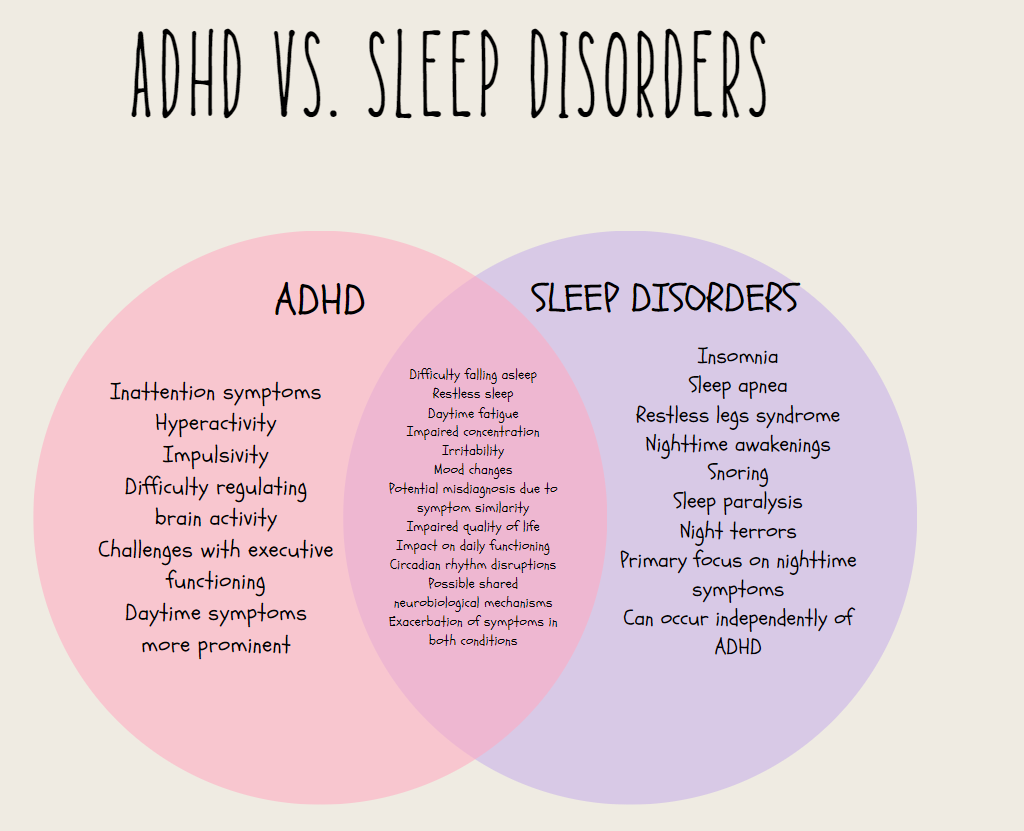
How Sleep Disorders and ADHD Overlap
ADHD is a neurodevelopmental disorder characterized by symptoms such as inattention, hyperactivity, and impulsivity. Sleep disorders are common in individuals with ADHD and can significantly impact their daily lives. Here are some key points about the overlap:
- Shared Symptoms: Both ADHD and sleep disorders can cause inattention, hyperactivity, and impulsivity. This overlap can sometimes lead to misdiagnosis or underdiagnosis of either condition.
- Exacerbation of Symptoms: Sleep disorders like insomnia, sleep-disordered breathing (SDB), and restless legs syndrome (RLS) can worsen ADHD symptoms. For instance, sleep fragmentation and hypoxia during sleep can lead to increased distractibility and cognitive deficits.
- Impact on Quality of Life: Both ADHD and sleep disorders independently contribute to lower quality of life and functional impairment. When they co-occur, the impact can be even more significant, affecting social, academic, and emotional well-being.
Why Sleep Matters
Quality sleep is crucial for everyone, but it’s especially important for those with ADHD. Poor sleep can worsen ADHD symptoms, making it even harder to focus, control impulses, and manage emotions during the day. Additionally, lack of sleep can affect overall health, mood, and quality of life.
Independent sleep disorders can exacerbate and/or mimic ADHD symptoms
- Insomnia: Difficulty falling or staying asleep.
- Delayed Sleep Phase Syndrome: A delay in the sleep-wake cycle, causing difficulty falling asleep and waking up at conventional times.
- Restless Legs Syndrome (RLS): An uncontrollable urge to move the legs in the evening, usually due to discomfort. This can sometimes reflect deficiencies in iron.
- Sleep-Disordered Breathing: Conditions like sleep apnea, where breathing repeatedly stops and starts during sleep. This can lead to poor sleep quality and contribute to deficits in concentration. Sometimes the first signs of underlying sleep apnea is loud snoring.
Treatment Options
Thankfully, there are various strategies to help manage sleep problems in people with ADHD. Here are some effective approaches:
1. Behavioural Interventions
- Sleep Hygiene: Establish a consistent bedtime routine. This includes going to bed and waking up at the same time every day, even on weekends.
- Relaxation Techniques: Practices like deep breathing, meditation, or using a digital mindfulness application like Headspace can help reduce anxiety and promote better sleep.
- Limit Screen Time: Reduce exposure to screens (phones, tablets, TVs) at least an hour before bedtime, as the blue light can interfere with the body’s natural sleep-wake cycle.
Addressing sleep problems in individuals with ADHD requires a comprehensive approach that includes both behavioural interventions and, in some cases, medication.
2. Medical Treatments
- Medications: In some cases, medications like melatonin can help regulate sleep-wake cycles. Stimulant medications like methylphenidate, commonly used to treat ADHD, have also been shown to improve sleep efficiency in some individuals.
- Addressing Comorbid Conditions: Treating conditions like sleep-disordered breathing or restless legs syndrome can alleviate symptoms that mimic or exacerbate ADHD, improving overall functioning and quality of life.
2. Medication
In some cases, medication might be necessary to help manage sleep issues. Options include:
- Treating night-time ADHD symptoms: Longer acting stimulant medications like methylphenidate, commonly used to treat ADHD, have also been shown to improve sleep efficiency in some individuals by addressing nighttime ADHD symptoms. There is also evidence supporting the use of non-stimulant ADHD medications to treat night-time ADHD symptoms such as clonidine and guanfacine.
- Melatonin: A natural hormone that regulates sleep-wake cycles. It can be helpful for those with delayed sleep phase syndrome. It is a weak sedative however is primarily a chronobiologic agent.
- Sleep Aids: Prescription medications can be used under the guidance of a healthcare provider, but they are generally considered a last resort due to potential side effects and dependency risks. In the case of chronic insomnia that has not responded to other interventions there may be a role for targeted interventions such as dual orexin antagonists; although evidence for their efficacy in those with comorbid ADHD is under investigation.
3. Addressing Comorbid Conditions
- Restless Legs Syndrome: Treatment for RLS can include iron supplements, medications, and lifestyle changes.
- Sleep-Disordered Breathing: Conditions like sleep apnea may require the use of a CPAP machine or other interventions to ensure proper breathing during sleep.
Seeking Help
If sleep problems persist, it’s important to consult with a healthcare provider. They can help identify the underlying causes and recommend appropriate treatments. Comprehensive assessments that consider both ADHD symptoms and associated sleep issues are crucial for effective management.
Conclusion
Managing sleep problems in individuals with ADHD can significantly improve their quality of life. By understanding the connection between ADHD and sleep, and by implementing effective treatment strategies, you can help ensure better sleep and overall well-being. Remember, you’re not alone, and there are resources and treatments available to help you or your child get the rest needed.If you have any concerns about sleep and ADHD, don’t hesitate to reach out to your healthcare provider for personalized advice and support.
Untreated ADHD can significantly impact sleep, leading to a cycle of worsening symptoms and poor quality of life. By understanding the connection between ADHD and sleep, and by seeking appropriate diagnosis and treatment, individuals with ADHD can experience improved sleep and better overall functioning. If you or your child has ADHD and struggles with sleep, consult with a healthcare provider to explore the best strategies for managing both conditions effectively.
 Toronto Sleep, Mood & Mind Clinic